Mikhail Iosifovich Nosyrev
composer (1924–1981)
Mikhail Nosyrev was born on May 28, 1924 in the city of Leningrad.
In 1941 he finished his 10-year studies at the Leningrad Conservatory School and was enrolled as a first-year student at the Conservatory itself. Two years later during the siege of Leningrad he became a solo violinist at the Leningrad radio committee and conductor at the Music Comedy Theatre.
In 1943 he was arrested and sentenced to death by firing squad for the “treason against the Motherland”. The main proof of the 19-year old young man's guilt was an “anti-Soviet” diary found during a house search.
A month later the sentence was commuted to a 10-year term, which he fully served as a concertmaster at the Music and Drama Theatre in a camp of Vorkuta.
From 1953 Nosyrev lived in Syktyvkar, where he became the first conductor of the Komi drama theatre.
From 1958 until 1981 Nosyrev was a conductor at the Voronezh State Opera and Ballet Theatre. He participated in dozens of productions.
In 1967 he became a member of the USSR Union of Composers (UC). He received his recommendation for entering the UC from Dmitri Shostakovich, whose creative work Mikhail Nosyrev admired greatly throughout all his life and to whom he dedicated his Second Symphony.
The ballet “The Song of Triumphant Love” written by the composer to the short story by Ivan Turgenev ran at the Voronezh State Opera and Ballet Theatre for about twenty seasons.
In practically all of the composer's works one can hear the echo of the tragedy of his youth.
Mikhail Nosyrev was completely rehabilitated from the charges of treason by the Supreme Court of the USSR in 1988, seven years after his death.
In 1999-2000 all major works of the composer – four symphonies, three concerts and the ballet “The Song of Triumphant Love” – were recorded by symphony orchestras of Voronezh and St. Petersburg and released as compact discs in London by the sound recording company “Olympia”.
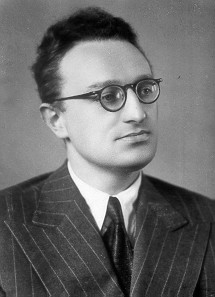 Mikhail Nosyrev in 1955
Russian (and Soviet) music has been a field in which I have specialised almost as far back as I can remember, for about half a century. During this long time I have grown accustomed to finding amazing surprises when and where I least expect them. The unbelievable numbers of talented, skilled, often even genial Russian composers are the explanation for this: no one, not even the most devoted friend of Russian music can possibly be familiar with all these floods of music!
Nevertheless my jaw dropped when I became acquainted with Mikhail Nosyrev’s music just a couple of years ago. The reason was not only the outstanding technical level of this music, from the sense of melody, harmony and rhythm to the orchestration which honours the brilliant Russian tradition in this field, but also the dramatic instinct which permeates every bar of Nosyrev’s scores.
To me it seems a wonder that a composer was able to write such music after having suffered such hardships as are described in his curriculum vitae. This is something very rare, and it reveals that Mikhail Nosyrev had not only an unusual musical talent, but also a human greatness of a rare kind.
Musicologist
Former producer at the Music Dept. of Swedish Radio
Chronology
1924Born May 28 in Leningrad (St. Petersburg).
1941Finished ten-classes school at the Leningrad Conservatory and was enrolled as a first-year student of the Leningrad Conservatory.
1943A Conductor – probationer of Leningrad’s Musical Comedy Theatre. The soloist of Radio orchestra.
1943During blockade attends rehearsals of Dmitry Shostakovich's Symphony #7.
1943September 30. Arrested by the NKVD and sentenced to death by firing squad December 10 in accordance with article 58 of the Criminal Code of the Russian Federation.
1943December 31. The extreme penalty commuted to 10 years of the GULAG.
1943–195310 years at Vorkuta camps.
1947Andante for Piano.
1947–1950Sonatina for Piano.
1947Skazka (A Fairy Tale), symphonic poem.
1948Fantasia on Russian folk songs.
1953Exiled to Syktyvkar. Performance music’s orchestration. Pianist, violinist and conductor of the camp’s musical theatre.
1955“Souvenir” for Piano.
1955–1958Conductor of Syktyvkar Drama Theater, work on orchestrations for plays
1956Marries Emma, a student at Syktyvkar teacher’s training college.
1957Capriccio for Violin and Orchestra.
1958Family moves to Voronezh. Conductor of Voronezh Opera and Ballet theatre.
1958Ballad of a Fallen Warrior. Symphonic poem.
1964Four Preludes for Harp.
1965Symphony No.1.
1966Ballet “The Unforgettable”.
1967Becomes a member of the USSR Union of Composers. Recommended by D.D.Shostakovich.
1968Nocturne for Flute and Piano.
1968Quartet No.1 for two violins, viola and cello.
1968–1969Ballet “The Song of Triumphant Love”.
1970Quartet No.2.
1971Concerto for Violin and Orchestra.
1973Concerto for Cello and Orchestra.
1974Concerto for Piano and Orchestra.
1976Ballet “The River Don Cossacks” / “Donskaya volnitsya”/.
1977Symphony No.2.
1978Symphony No.3.
1979“Night”. Nocturne for mixed chorus.
1980Symphony No.4.
1980Quartet No.3.
1981Dies on March 28.
1988Completely rehabilitated by the Supreme Court of the USSR .